Speakers
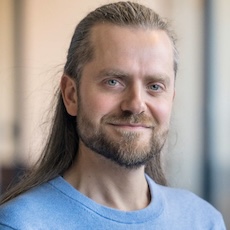
Rufus Baas
OASIS, Mediacollege Amsterdam, The Netherlands
Rufus Baas is Head of Innovation & Research at Mediacollege Amsterdam and Program Director of OASIS, a national collaboration connecting technical creative vocational education, industry and research around XR. Working at the intersection of technology, creativity and education, he focuses on how emerging technologies reshape creative industries, professional skills and learning. His work spans immersive experiences, AI, applied research and the development of collaborative innovation environments. Through OASIS, he brings together six Dutch creative vocational schools and 22 industry partners to develop new educational programmes, strengthen applied research and build a sustainable infrastructure for talent development and innovation. Driven by a fascination with what makes experiences truly immersive, he is particularly interested in bridging the gap between technological possibilities, human experiences and real-world adoption.
OASIS website

Sergio Cabrero Barros
Fundación Vicomtech, Spain
Sergio Cabrero Barros is the head of the Interactive Media Technology research line at Vicomtech, an applied research organization in the Basque Country. His work focuses on advancing technologies in extended reality (XR), artificial intelligence, and interactive media to create human-centric, immersive, and intelligent experiences. He has contributed to projects spanning diverse sectors — from music and gastronomy to automotive and security — applying research outcomes to real-world industrial and creative domains. Before joining Vicomtech, Sergio worked as a researcher at IBM Research, CWI, and as lecturer the University of Oviedo, where he earned a degree in Telecommunications Engineering and a PhD in Computer Science.
Personal website

Tilo Hartmann
VU Amsterdam, The Netherlands
Dr. Tilo Hartmann is professor and chair of the Department of Communication Science at the VU Amsterdam. He applies media-psychological approaches and methods to study questions such as why people use immersive media technologies, how they subjectively experience and perceive these technologies (e.g., presence), and how they are affected by their use (e.g., learning, psychological wellbeing, mental health effects).
Personal website
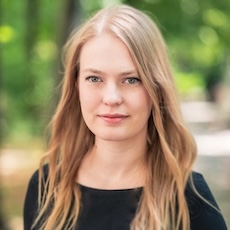
Tanja Kojić
Technische Universität Berlin, Germany
Tanja Kojić is a Senior Research Scientist at the Quality and Usability Lab at Technische Universität Berlin, Germany. She received her doctoral degree in computer science (Dr.-Ing., summa cum laude) for her dissertation on user experience in virtual reality serious games. Her research lies at the intersection of human-computer interaction and user experience, with a focus on immersive media, particularly virtual and augmented reality, and multimodal interaction. She investigates how interaction design, system characteristics, and individual user factors shape perceived quality and user experience. Her work combines controlled user studies with standardised subjective assessment methods. She is also an author of ITU-T Recommendation P.812 on the subjective evaluation of interactive virtual reality. Her overarching aim is to derive empirically grounded principles for the design and evaluation of human-centred interactive systems.
Personal website

Sylvia Xueni Pan
Goldsmiths University of London, United Kingdom
Prof. Sylvia Xueni Pan PhD is a Professor of VR at Goldsmiths, University of London. She co-leads the Goldsmiths Social, Empathic, and Embodied VR lab (SeeVR Lab) and the MA/MSc in Virtual and Augmented Reality programme at Goldsmiths Computing. Her research interest is the use of Virtual Reality as a medium for real-time social interaction, in particular in the application areas of training and therapy.
Personal website

Chirag Raman
TU Delft, The Netherlands
Chirag is an Assistant Professor at TU Delft, where he leads the Tapri Lab within the Department of Intelligent Systems. His research explores the foundations of intelligence by developing multimodal generative and causal models that enable AI systems to perceive, reason, and act in open-ended, real-world environments. At the core of his work lies a simple premise: human intelligence was shaped not merely by physical problem-solving, but by navigating complex social worlds. Consequently, he leverages multi-agent interactions across physical and virtual environments as a framework for modeling continually adaptive behaviors. To this end, he draws upon insights from cognitive science and social psychology to inform my computational techniques. As part of the Hybrid Intelligence Center, Chirag co-leads the Robotic Surgery case study in collaboration with Erasmus Medical Center, developing coupled human-agent systems for microsurgery. He is also a visiting researcher at the DIS Group, CWI Amsterdam, where he advances machine learning techniques for facilitating remote and immersive human interactions.
Personal website

Lea Skorin-Kapov
University of Zagreb, Croatia
Lea Skorin-Kapov is Professor and head of the Multimedia Quality of Experience Research Lab (MUEXLab) at the University of Zagreb, Faculty of Electrical Engineering and Computing. Her research interests include Quality of Experience assessment and modeling of multimedia and immersive media applications, design and evaluation of networked and social XR experiences, and cross-layer management of QoE in networks.
Personal website

Julie Williamson
University of Glasgow, United Kingdom
Julie Williamson is a Senior Lecturer in Human Computer Interaction at the University of Glasgow in the internationally recognised Glasgow Interactive Systems (GIST) research group. My research focuses on how we connect in immersive environments by applying social signal processing to modelling behaviour in XR and understanding how we experience immersive realities together. The future of XR is social, but these experiences fall far short when compared to face-to-face interactions.
Personal website

Funda Yildirim
University of Twente, The Netherlands
Dr. Funda Yildirim is currently an Assistant Professor at the University of Twente, Netherlands. As a computer scientist with a PhD in cognitive neuroscience, her research focuses on using extended reality (XR), sensory feedback, and neural signals to influence sustainable, health-related, and pro-social behaviors. Her work explores topics such as consumption preferences, attitudes toward climate change, and smart city usability, bridging technology and behavioral science.
Personal website